Posts

Showing posts with the label financial mindset
Image
I Used to Chase Dividends. Now I Wait for Opportunities There was a time when I believed dividends were the answer. Dividend ETFs made me feel productive. Watching monthly cash roll in was comforting — like my portfolio was "doing something." But it also made me passive. I wasn’t responding to the market. I was reacting to fear of missing out, to a need for stability that wasn’t actually grounded in strategy. But I started noticing something strange: the market would rally, but my income stayed the same. I wasn’t participating in growth. I was just collecting crumbs. The Power of Income — and the Need to Look Beyond There’s no denying it: regular income brings comfort. It gives structure, predictability, and a sense of progress. That’s why so many investors chase monthly yields. And for a while, I did too. But in the stock market, comfort isn’t the whole story. If you want to grow, you have to observe. You have to study. You have to wait for the moment that fits...
Image
The Power of Steady: Why Dollar-Cost Averaging Works When markets get rough, most people freeze—or flee. But the ones who stay with a plan often come out stronger. That’s the quiet power of dollar-cost averaging (DCA). DCA means you invest a fixed amount on a regular schedule, regardless of market conditions. It sounds simple, and it is. But its emotional impact is what makes it powerful. Instead of trying to predict when the market will fall—or bounce—you commit to showing up. You stay in motion while others get stuck in fear. How DCA protects you: When prices drop, your regular investment buys more shares. That lowers your average cost. When prices rise, you already have a growing position working for you. Over time, you smooth out volatility. You remove the pressure to be perfect. But here’s the underrated part: DCA protects your peace of mind . You don’t have to check your portfolio every day. You don’t have to feel guilty for missing a bottom or chasing ...
Image
How Emotions Influence Your Financial Decisions Money Isn’t Just Numbers — It’s Emotion Money should be rational. Numbers, spreadsheets, logic. But when you check your portfolio after a market drop, or when you get paid and feel the urge to spend — it’s not logic talking. It’s emotion. Fear, joy, pride, shame, urgency. We don’t make financial decisions with spreadsheets. We make them with our nervous systems. Fear and Stress Cloud Rational Thinking Stress hijacks our brains. Under pressure, the body releases cortisol — a hormone meant to help us survive immediate threats. But in modern life, this “fight or flight” instinct shows up when the market dips, or when someone else seems more successful. “A lot of people with high IQs are terrible investors because they've got terrible temperaments.” — Charlie Munger Smart doesn’t beat the market. Steady does. Emotional Spending Is a Response, Not a Flaw Ever bought something to feel better? That wasn’t weakness — it was you...

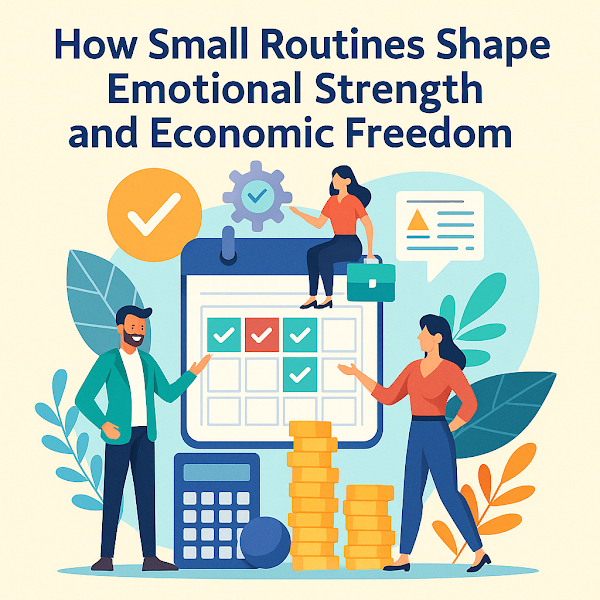
Build Emotional Strength with Small Routines

Image
The Emotional Cost of Financial Pressure Stress isn't just about work or relationships. For many, it's the growing anxiety of not being ready. When inflation eats away at the value of your savings, and you realize you’re unprepared for future needs, stress becomes chronic. Warren Buffett once said: "If you don’t find a way to make money while you sleep, you’ll work until you die." It’s a bold truth that hits deep. But how do you even begin building that future — especially when you’re already overwhelmed? Routines Are a Form of Compounding Too We often talk about compound interest like it's magic (and it is). But what most people miss is this: compounding doesn't only apply to money. The habits you repeat every morning — the food you choose, the time you wake, the thoughts you start your day with — these are compounding, too. Small actions, repeated daily, don’t stay small. They become identity. And eventually, outcome. So instead of worrying ab...